Made in New York: Kodak
For generations, one name became almost synonymous with photography—Kodak.
Kodak & New York State
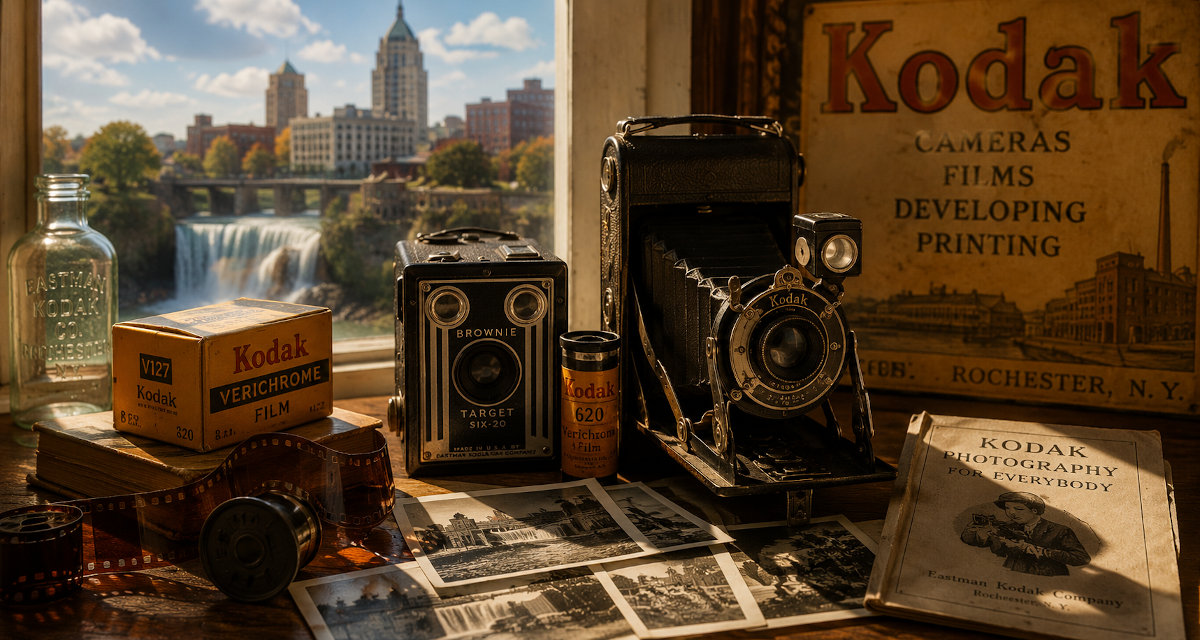
Founded in Rochester, New York, the Eastman Kodak Company transformed photography from a complex scientific process into an everyday activity enjoyed by millions of people around the world. Through innovation, affordability, and a simple philosophy of making photography accessible to everyone, Kodak helped preserve countless family memories while shaping modern visual culture.
From family vacations and graduations to historic world events and the exploration of space, Kodak's story is deeply connected to both New York State and the history of photography itself.
George Eastman's Vision
George Eastman believed photography should be simple enough for anyone to enjoy. During the late nineteenth century, photography often required bulky equipment, glass plates, and specialized knowledge. Eastman changed that by developing roll film and easy-to-use cameras that brought photography into ordinary homes.
His famous slogan, "You press the button, we do the rest," perfectly captured his vision of making photography simple and accessible.
The Birth of Kodak
In 1888, Eastman introduced the Kodak camera, a compact device preloaded with enough film for one hundred photographs. After finishing the roll, customers mailed the entire camera back to the company, where the film was developed, printed, and the camera reloaded before being returned.
The idea revolutionized photography and introduced millions of people to capturing everyday moments.
Rochester Becomes the World's Imaging Capital
As Kodak grew, Rochester became an international center for photography, film manufacturing, chemistry, and engineering. Thousands of employees worked to produce cameras, photographic film, medical imaging products, motion picture film, and scientific equipment that reached nearly every corner of the globe.
The company's influence helped shape Rochester into one of America's leading centers for innovation and technology.
Capturing History
Kodak film documented some of history's most important moments. Families preserved generations of memories, journalists recorded world events, filmmakers created classic motion pictures, and scientists relied on Kodak products for research and exploration.
Kodak film even played a role in space exploration, helping record images that expanded humanity's understanding of Earth and the universe.
Innovation Continues
Although photography has largely shifted to digital technology, Kodak's legacy continues through imaging science, printing technologies, and advanced materials. The company's innovations laid the foundation for many of the photographic technologies people enjoy today.
Modern digital photography may look very different from the original Kodak camera, but the goal remains the same—capturing life's most meaningful moments.
Visit Rochester
Visitors to Rochester can explore the George Eastman Museum, one of the world's leading museums dedicated to photography, motion pictures, and photographic technology. The beautifully preserved Eastman mansion, historic gardens, and remarkable collections provide a fascinating look into the history of photography and innovation.
Rochester also celebrates its technological heritage through museums, parks, festivals, and cultural attractions that continue to honor the city's remarkable contributions to science and industry.
Why Kodak Matters
Kodak changed the way people experienced the world. It transformed photography from a complicated scientific process into a cherished everyday activity, allowing families, travelers, artists, and historians to preserve moments that might otherwise have been lost. Few companies have had such a lasting impact on how humanity remembers its own story.
Made in New York celebrates the companies, inventions, products, and innovations that have shaped the Empire State. Kodak remains one of New York's greatest success stories—a company that helped millions of people capture memories, tell stories, and see the world through a camera lens.