031 Maple Syrup in New York State: A Sweet Tradition
Every spring, as winter loosens its grip and temperatures rise above freezing during the day before dropping below freezing at night, maple trees begin one of nature's most remarkable seasonal events.
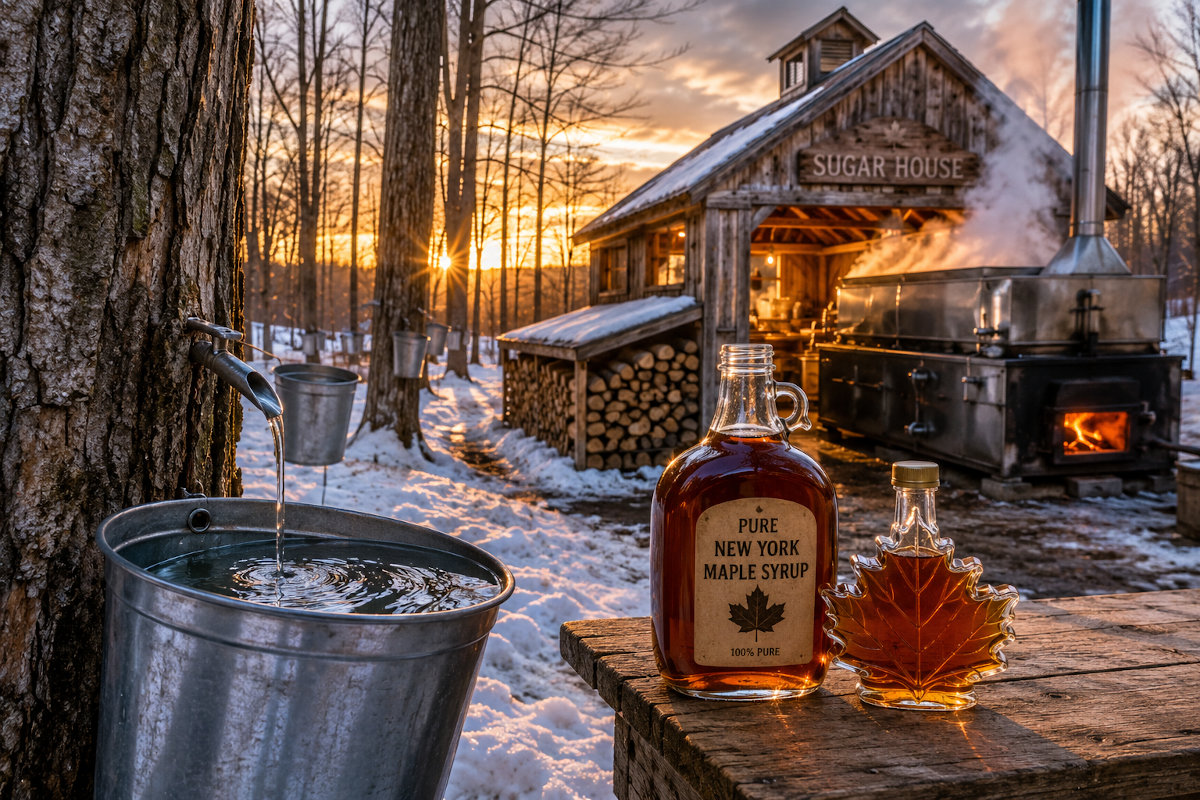
New York State Maple Syrup
Across New York State, producers collect this clear sap and transform it into one of the state's most beloved natural products—pure maple syrup.
From small family sugarhouses tucked into the Adirondacks to larger maple operations across the Catskills, Tug Hill, and western New York, maple syrup has become an important part of New York's agricultural heritage and rural culture.
A Tradition Rooted in History
Long before European settlers arrived, Native Americans discovered that maple sap could be collected and concentrated into a naturally sweet food. Early settlers adopted these techniques, and maple sugaring soon became a spring tradition throughout the forests of New York.
Today, many maple producers continue traditions that have been passed down through generations while combining them with modern equipment that improves efficiency without changing the quality of the finished syrup.
How Maple Syrup Is Made
The process begins in late winter or early spring when alternating freezing nights and warmer days create pressure inside maple trees.
- Small taps are placed into healthy sugar maple trees.
- Sap is collected through buckets or modern tubing systems.
- The sap is carefully boiled to remove water.
- Approximately 40 gallons of sap are needed to produce just one gallon of pure maple syrup.
The result is a rich, naturally sweet syrup with flavors that vary slightly depending on the season and the local forest.
New York by the Numbers
- New York consistently ranks among the top maple syrup producing states in the United States.
- More than 2.9 million maple taps are used by producers across the state in many seasons.
- Recent harvests have exceeded 800,000 gallons of pure maple syrup in a single season.
- Maple syrup contributes tens of millions of dollars annually to New York's agricultural economy.
Where Maple Country Begins
Excellent maple forests can be found throughout New York, including:
- Adirondack Mountains
- Tug Hill Plateau
- Catskill Mountains
- Finger Lakes Region
- Central New York
- Western New York
Nearly every region of the state has family-owned sugarhouses welcoming visitors each spring.
A Maple Story:
"Growing up on our family farm, we operated a sugarbush with more than 4,000 taps. Every bucket of sap was gathered by hand. During a really good run, my brother and I were so busy collecting sap and boiling through the night that we got only about four hours of sleep over two days. We wouldn't recommend that schedule—but it's something we'll never forget. That's maple season in New York."
More Than Syrup
A visit to a maple producer often includes much more than buying syrup. Many sugarhouses offer tours, demonstrations, fresh maple candy, maple cream, maple sugar, maple cotton candy, maple-coated nuts, and of course, warm pancakes covered with fresh syrup.
Each March, Maple Weekends invite visitors to experience the entire process—from tapping trees to watching sap boil inside traditional sugarhouses.
Experience Maple Season
Few experiences capture the arrival of spring quite like walking through a maple forest on a cool morning, hearing sap drip into buckets, and smelling sweet steam rising from an evaporator.
Whether you're visiting a small family sugar shack or a large commercial maple farm, New York's maple tradition offers a delicious glimpse into the state's forests, history, and rural heritage.