027 Charles L. Eastlake Design Influence that Shaped the Victorian Zehr Estate
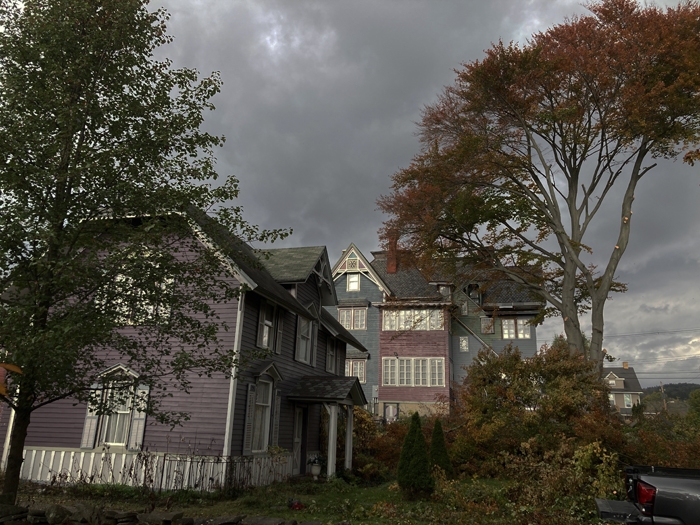
We first look at the handbooks by Charles L. Eastlake, then follow with a comparison & some quotes.
Hints on Household Taste: The Victorian Handbook that Shaped the Zehr Estate
Charles L. Eastlake’s practical 19th-century manual for furnishing and decorating — a guiding voice for the Victorian homeowner and a visible influence on the interiors of the Zehr Estate.
Overview & publication
Hints on Household Taste was written by Charles L. Eastlake and first published in the late 1860s (commonly cited as 1868–1869). Eastlake’s text became one of the most influential Victorian manuals on furniture, upholstery, finishes, color combinations, wallpaper, carpets, and decorative detail; it was republished and anthologized many times in the 19th and 20th centuries and is widely available in modern reprints and online facsimiles.
Who was Charles Eastlake?
Charles Locke Eastlake (1836–1906) was a British architect, writer, and critic whose name became attached to a style and approach emphasizing honest construction, good proportion, and decorations that derived from structure and craft rather than excessive historical copying. His book aimed to help ordinary homeowners and decorators choose furnishings that were tasteful, durable, and practical.
What the book covers (quick tour)
- Furniture & Joinery: principles for proportion, solid construction, and ornament reduced to meaningful, geometric detail.
- Upholstery & Fabrics: practical advice on choosing coverings, stuffing, and arranging furniture for comfort and durability.
- Color & Decoration: suggested palettes, how to combine wallpaper, paint, and textiles without creating visual chaos.
- Carpets & Floorings: guidance on rug patterns, placement, and traffic considerations.
- Wallpaper, Tiles & Fixtures: where ornament helps and where it distracts; attention to the relationship between surface pattern and architecture.
- Lighting, Chimneys & Hardware: functional details often overlooked by less experienced decorators.
Across these topics Eastlake blends practical rules (“what works”) with aesthetic arguments (“what is tasteful”). Readers today still value the book as both a primary source for Victorian taste and a handbook on functional design choices.
Core principles & lasting influence
Eastlake’s recurring points — honesty of construction, clarity of form, proportion, and restrained ornament — mark a reaction against earlier Rococo excesses and toward the values that prefigured the Arts & Crafts movement. Because his advice was practical and widely reprinted, Eastlake’s prescriptions shaped furniture makers, decorators, and homeowners in both Britain and the United States. Many surviving Victorian houses (including the Zehr Estate) show Eastlake-influenced fixtures: geometric carvings, spindlework, modest inlay, and carefully matched wallpapers and carpets.
How the Zehr Estate reflects Eastlake ideas
Eastlake signatures:
- Geometric Carving & Simplified Motifs: lighter, more restrained carved decoration around mantels, door surrounds, and furniture legs (rather than florid scrollwork).
- Visible, Well-Made Joinery: exposed tenons, honest joints, and furnishing built to demonstrate craft rather than hide it.
- Coordinated Surface Treatments: wallpaper patterns, carpet fields, and curtains chosen to harmonize rather than compete — often using the subtle, darker palettes Eastlake recommended.
- Practical Room Planning: furniture arranged for circulation and use rather than purely for effect — Eastlake emphasized that a house should be lived in.
These details aren’t a proof of direct instruction from Eastlake (homeowners and local builders often adapted many influences), but the overlap between Eastlake’s published recommendations and the Zehr Estate’s interiors is strong: the Estate demonstrates the same mix of craftsmanship, solid construction, and tasteful restraint Eastlake promoted.
Why this matters for historic interpretation and restoration
Using Eastlake as a reference can guide historically sensitive restoration: choose period-appropriate motifs, avoid adding later Victorian excesses that Eastlake himself would have rejected, and favor sturdy, maker-driven repairs over superficial decorative “fixes.” Because the book was widely distributed, it is a defensible interpretive source when making restoration decisions for an Eastlake-influenced home like Zehr Estate.
Images & where to find the full text
The complete text and plates are available in public facsimile and in modern Dover reprints. High-quality scans (plates and chapter illustrations) are especially useful when matching carpet patterns, inlay, tile designs, and frame proportions during restoration.
A History of the Gothic Revival: Charles Eastlake’s Landmark Study and Its Influence on the Zehr Estate
Published in 1872, Charles Locke Eastlake’s A History of the Gothic Revival offered one of the first systematic accounts of the Gothic style’s resurgence. This important volume helps us understand how estates like Zehr reflect both aesthetic ideals and architectural scholarship of the Victorian era.
Overview & publication
A History of the Gothic Revival was first published in London in 1872. At more than 400 pages with extensive illustrations, the book traced the development, key figures, and philosophy behind the Gothic Revival movement in Britain. Unlike purely stylistic manuals, Eastlake’s work was part historical survey, part critical analysis—making it one of the earliest academic-style treatments of architectural revivalism.
Eastlake and his architectural eye
Charles Locke Eastlake (1836–1906) was not only a designer and theorist but also an architectural historian. By the time he wrote A History of the Gothic Revival, Eastlake had already established himself as an advocate of honest craftsmanship and sound construction. This volume broadened his focus: instead of just prescribing taste, he mapped the revival’s roots, explaining how medieval forms re-entered modern practice.
What the book covers
The work is structured chronologically and thematically, covering:
- Origins of Gothic revival taste: Early antiquarian interest in medieval ruins and ecclesiastical design.
- 18th-century precursors: Horace Walpole and Strawberry Hill, the romantic fascination with Gothic castles, and early picturesque theory.
- 19th-century leaders: Architects such as Augustus Pugin, Sir Charles Barry, and George Gilbert Scott, whose works defined Gothic as a serious architectural language.
- Principles of Gothic design: Verticality, pointed arches, tracery, ribbed vaulting, and an emphasis on structure as ornament.
- Philosophical foundations: How Gothic was tied to morality, truthfulness in construction, and the spirituality of form.
- Illustrations & examples: Engravings and descriptions of churches, civic buildings, and private estates that embodied the revival.
Why it mattered
A History of the Gothic Revival gave coherence to what had been a scattered cultural trend. By presenting Gothic as both an historical lineage and a design philosophy, Eastlake’s book elevated the style from “romantic fancy” to a legitimate, scholarly discipline. Architects, patrons, and homeowners could now see their choices within a larger historical framework.
The Zehr Estate connection
Though the Zehr Estate is most visibly linked to Victorian domestic taste, its architectural bones and decorative motifs show the influence of the Gothic Revival Eastlake chronicled:
- Pointed arches & tracery: Window and doorway forms reflecting medieval models.
- Steeply pitched roofs & gables: A hallmark of Gothic Revival, enhancing vertical emphasis.
- Woodwork and carving: Eastlake’s writings encouraged restrained but meaningful Gothic motifs in both interiors and furnishings.
- Sense of moral architecture: A house should not only shelter but also uplift its inhabitants—a Victorian idea tied directly to Gothic philosophy.
Seen through Eastlake’s lens, the Zehr Estate is part of a continuum: it embodies the Victorian search for beauty rooted in history, craftsmanship, and structural integrity.
Guidance for restoration & interpretation
For those studying or restoring Gothic Revival properties today, Eastlake’s volume remains a critical resource. It helps us:
- Identify authentic Gothic features versus later additions.
- Understand how ornament should follow structure, not obscure it.
- See the estate within a European-wide conversation about history, religion, and modernity.
Where to access the book
The full text of A History of the Gothic Revival is available in the public domain through the Internet Archive and Google Books. Modern reprints also exist for those who want a bound reference copy.
Charles L. Eastlake & The Zehr Estate: A Comparative Analysis
How the design principles in Charles L. Eastlake’s influential works — Hints on Household Taste (c.1868) and A History of the Gothic Revival (1872) — appear in the architecture and interiors of the Zehr Estate.
Eastlake’s core design principles (summarized)
Eastlake’s two books combine prescriptive taste advice and historical perspective. For quick reference, the recurring principles we use in this comparison are:
- Honesty of construction: visible, well-executed joinery and structurally expressive detailing.
- Proportion & clarity: careful balance of mass, rhythm, and scale rather than ornate excess.
- Form as ornament: ornament derived from structure — tracery, ribbing, and geometric carving that echo construction methods.
- Coordinated surfaces: wallpaper, carpet, and upholstery chosen to harmonize with architectural lines.
- Functional planning: rooms arranged for circulation and everyday use rather than theatrical display.
Room-by-room analysis: How Eastlake’s ideas appear at Zehr
Parlor — Furniture & social planning
Eastlake argued that furniture should show solid construction and be arranged for use.
- Upholstery & chairs: parlor chairs with visible joinery and simple geometric carving. Eastlake favored forms that display how they were made — tenons, pegging, and well-proportioned legs — rather than oversized scrollwork.
- Room planning: furniture is grouped for social exchange (a practical consideration Eastlake stressed), leaving clear circulation paths from the entry and stair to the fireplace and window seats.
Library — Shelving, and the vertical line
- Bookcases & cornice work: bookcase pilasters and corbel details use vertical rhythm to reinforce the room’s upright proportion — an effect Eastlake connected to the moral and visual uplift of Gothic architecture.
Entry hall & stair — Honest joinery and newel design
The Zehr stair and hall show Eastlake’s insistence on visible craftsmanship. Newel posts, balusters, and the stair string display:
- Articulated joinery: exposed pegged joints and geometric carving that read as structure-first ornament.
- Scale & proportion: the stair’s rise, run, and newel proportions follow the pragmatic approach Eastlake recommended — comfortable to use and visually coherent from both the stair and the upper landing.
Fireplace mantel — Mantel design and chimney-piece traditions
Eastlake wrote at length about the chimney-piece as a focal point and argued for mantels that respected structural proportions. At Zehr:
- Proportional surround: the mantel surround is stepped and geometrically carved — show restrained carving emphasizing frame and weight rather than florid applique.
- Functional integration: hearth size, fender details, and adjacent built-ins align with Eastlake’s rule that decoration should never compromise utility.
Restoration & interpretation tips informed by Eastlake
If you’re preserving, restoring, or interpreting the Zehr Estate, Eastlake’s writings offer practical guidance:
- Prioritize structure-first repairs: where possible, repair joinery and framing before surface reinvention. Eastlake’s emphasis on honest construction makes structural repair the first line of conservation.
- Match scale & rhythm: when replacing a baluster, newel, or mantel element, measure and replicate the original proportion rather than copying decorative style only.
- Avoid retrospective overstatement: Eastlake warned against adding later ornamental excess that doesn’t relate to structure — keep restorations honest and historically defensible.
Credits & sources
Primary texts: Charles L. Eastlake, Hints on Household Taste (c.1868) and A History of the Gothic Revival (1872). Both are in the public domain; high-resolution facsimiles and plate scans are available through Internet Archive and HathiTrust.
Representative quotes from Charles L. Eastlake
Short excerpts from Hints on Household Taste (c.1868–1878) and A History of the Gothic Revival (1872) that relate closely to the architecture and interiors of the Zehr Estate.
-
“When did people first adopt the monstrous notion that the ‘last pattern out’ must be the best?”
Hints on Household Taste.
-
“No one wants a carpet in the nooks and corners of a room.”
Hints on Household Taste.
-
“The first object of furniture is to be useful.”
Hints on Household Taste.
-
“Honesty of construction is one of the first principles of good taste.”
Hints on Household Taste.
-
“Ornament should follow structure; form taken from construction makes the best decoration.”
Hints on Household Taste.
-
“It is pleasant to have such parts of the floor assert their independence.”
Hints on Household Taste (on carpets and floor fields).
-
“Interior shutters, properly designed, are a useful and dignified addition to windows.”
Hints on Household Taste (on window treatment).
-
“I have long felt convinced of the necessity... to extricate from the confused mass those large principles of right.”
A History of the Gothic Revival.
-
“A day never passes without our hearing our English architects called upon to be original.”
A History of the Gothic Revival.
-
“Proportions and truth to material are the great canons of mediæval builders.”
A History of the Gothic Revival.
-
“The Gothic revival sought forms expressive of structure and spiritual purpose.”
A History of the Gothic Revival.
-
“Furniture should be well-proportioned, with ornament derived from its construction.”
Hints on Household Taste.
-
“A house should be adapted for the uses of life, and not merely to display wealth.”
Hints on Household Taste.
-
“The influence of the Gothic is felt where proportion and honesty prevail.”
A History of the Gothic Revival.
-
“The chimney-piece must unite convenience with fit proportion and sober ornament.”
Hints on Household Taste (on mantels & chimneys).