035 The New York State Stone Trail: Buildings, Quarries, and Craftsmanship That Shaped the State
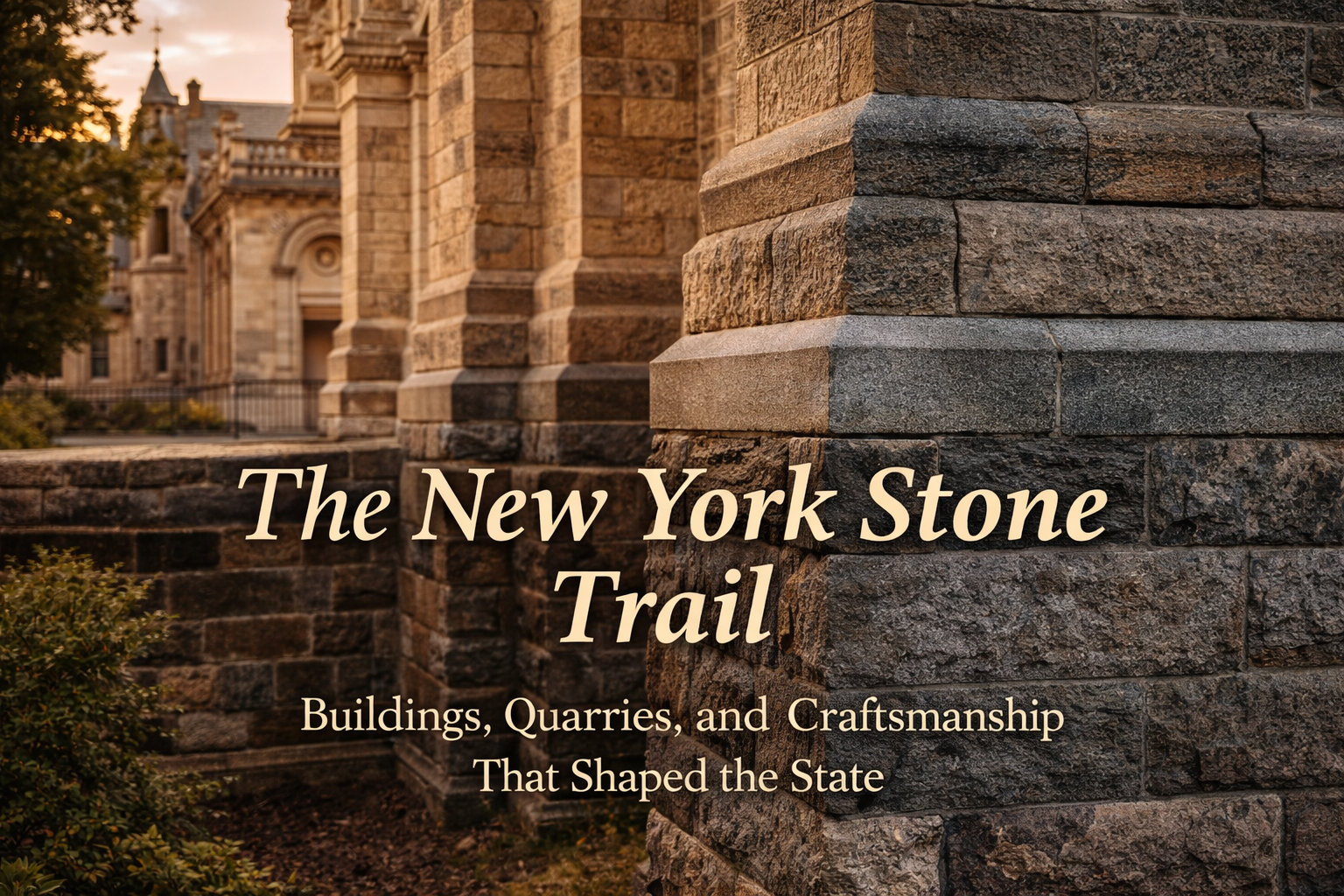
New York State is built on stone — quite literally. Beneath its cities, villages, farms, and forests lies a rich geological foundation that has shaped the architecture, infrastructure, and character of the Empire State for generations.
The New York Stone Trail is a journey through that legacy, connecting historic buildings, regional quarry traditions, and the craftsmanship that turned local stone into landmarks that still define communities today.
What Is the New York Stone Trail?
The New York Stone Trail is not a single path, but a collection of regions and routes that tell the story of how stone was quarried, shaped, and used across the state. From slate roofs and bluestone sidewalks to marble halls and granite bridges, each region reflects the geology beneath it and the people who worked the land.
Traveling the Stone Trail invites visitors to slow down, look up, and notice the materials that quietly surround them.
Why Stone Matters in New York
Stone was once the most durable and practical building material available. Before modern transportation, communities relied on what was nearby — and New York had an abundance of high-quality stone.
Local quarries supplied:
- Homes and farm buildings
- Churches and schools
- Courthouses and civic structures
- Sidewalks, bridges, and retaining walls
Because stone was sourced locally, architecture developed a strong regional identity — one that can still be seen today.
Major Stone Types Along the Trail
Slate
Slate became the roofing material of choice for much of New York in the 19th and early 20th centuries. Durable, fire-resistant, and beautiful, slate roofs still crown historic homes, churches, and institutions throughout the state.
Bluestone
Bluestone is one of New York’s most iconic materials. Quarried primarily in the Catskills and Hudson Valley, it was widely used for sidewalks, curbs, steps, and patios — many of which remain in use today.
Limestone & Dolostone
Limestone and related stone types form the backbone of much of New York’s infrastructure. These stones are commonly found in foundations, bridges, and civic buildings, particularly in central, western, and northern regions.
Marble
Marble brought elegance and refinement to public buildings, churches, and historic interiors. New York marble played a significant role in institutional and architectural design during the 1800s.
Granite
Known for its strength, granite was often used where durability mattered most — monuments, curbing, bridges, and heavy construction.
Stone Trail Regions to Explore
The Stone Trail can be experienced through several distinct regions, each with its own character:
- Hudson Valley: Bluestone, slate roofs, historic villages, and river towns
- Capital Region & Eastern NY: Slate, limestone, marble, and civic architecture
- Catskills: Bluestone quarries, mountain towns, and traditional stonework
- North Country & Adirondack Foothills: Granite and limestone infrastructure
- Finger Lakes & Central NY: Limestone foundations and agricultural stone
Each region offers opportunities for scenic drives, walking tours, and quiet discovery.
From Quarry to Craft
The Stone Trail is as much about people as it is about geology. Quarry workers, masons, roofers, and builders developed specialized skills to extract, shape, and install stone by hand.
Many of these techniques were passed down through generations, and their work still stands today — often outlasting the tools and technologies that replaced them.
Preservation, Reuse, and Sustainability
One of the most remarkable aspects of stone is its longevity. Buildings constructed with local stone often remain structurally sound for centuries. Today, preservation efforts focus on maintaining and repairing historic stonework rather than replacing it.
In many cases, reclaimed stone continues to find new life in restoration projects, landscapes, and adaptive reuse — making stone one of the most sustainable building materials available.
How to Experience the Stone Trail
You don’t need a guidebook to begin. Simply:
- Notice rooflines in historic towns
- Look at sidewalks, foundations, and walls
- Visit local museums or historic districts
- Explore scenic byways and small villages
As you travel, the Stone Trail reveals itself quietly — in textures, colors, and craftsmanship that have endured for generations.
The Story Continues
The New York Stone Trail is an evolving story. As communities preserve historic buildings, adapt old quarries, and rediscover traditional materials, stone remains part of New York’s living landscape.
Whether you’re a history enthusiast, architecture lover, or curious traveler, the Stone Trail offers a deeper way to experience New York State — one stone at a time.