033 Stone Quarries in New York State: Where NY’s Building Stone Comes From
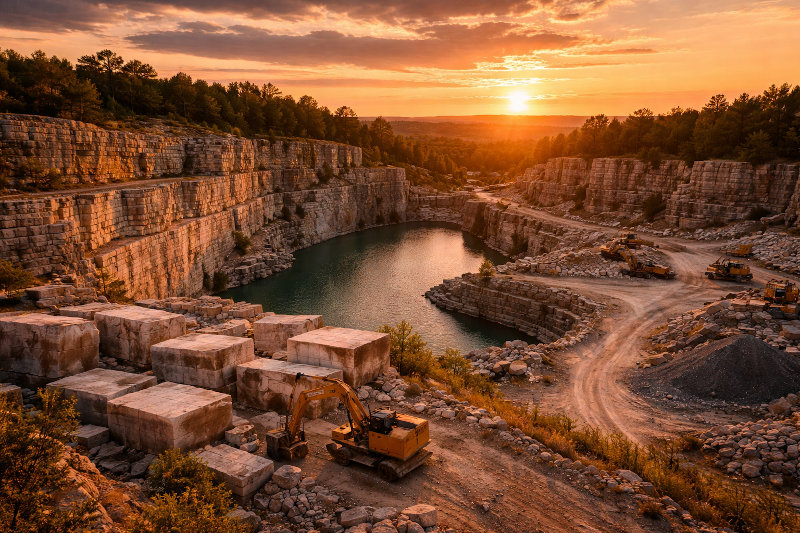
New York State has a deep history of quarrying stone for buildings, bridges, roads, monuments, and landscapes. From rugged granite and durable limestone to beautiful marble, bluestone, and sandstone, the Empire State’s geology has helped shape communities across the Northeast.
What Is a Stone Quarry?
A stone quarry is an open excavation where rock is extracted from the earth and processed into usable products. Depending on the site, stone may be cut into blocks for building and landscaping, crushed for road base and concrete aggregate, or refined for specialized uses such as cement and industrial minerals.
Major Types of Stone Quarried in New York
Limestone & Dolostone
Limestone is one of New York’s most widely quarried materials. It’s commonly used for:
- Road stone and base material
- Concrete aggregate
- Construction fill
- Manufactured sand
- Cement and industrial applications (at certain facilities)
Granite
Granite is prized for its strength and durability. In New York, granite is often used for:
- Monuments and memorials
- Curbstone and heavy-duty construction
- Architectural stone and hardscapes
Marble
New York marble has a long architectural history, valued for its classic appearance and workability. Marble is commonly used for:
- Interior stone applications
- Historic restoration projects
- Decorative building elements
Bluestone & Sandstone
Bluestone is iconic in New York, especially for patios, walkways, and traditional architectural details. Sandstone and bluestone products are often used for:
- Flagging and pavers
- Steps and retaining walls
- Landscaping and outdoor living spaces
Where Are New York’s Quarry Regions?
New York’s quarry activity varies by region based on local geology. Common quarry areas include:
- Upstate & North Country: limestone, granite, and aggregate quarries supporting infrastructure
- Capital Region: long history of stone production and industrial minerals
- Hudson Valley & Catskills: bluestone and building stone traditions
- Central & Western NY: limestone and aggregate sites supplying road and construction projects
What Happens After Stone Is Mined?
Most quarries include on-site processing to sort and shape material. Typical steps include:
- Extraction: drilling and controlled blasting or cutting stone from the rock face
- Crushing & screening: separating stone into different sizes for specific uses
- Washing: removing fines for cleaner aggregate and sand products
- Stockpiling & shipping: delivering material to construction projects across the region
Can You Visit a Stone Quarry in New York?
Most operating quarries are active industrial sites and are not open to the public due to safety and liability. However, there are a few ways visitors can experience New York’s quarry history:
- Historic quarry sites that have been converted into parks or interpretive areas
- Museums and local history centers that highlight the stone industry
- Occasional scheduled tours offered by select operations or community events
Tip: If you’re interested in visiting a working quarry, always contact the company directly and ask whether they offer any guided tour days or community open houses. Never enter a quarry without explicit permission.
Quarries, Reclamation, and the Environment
Modern quarrying in New York typically includes planning for reclamation—the process of restoring or repurposing a site after extraction. Depending on the location and future land use, reclaimed quarries may become:
- Wildlife habitat and open space
- Lakes or wetlands
- Public or private recreation areas
- Industrial or storage sites
Why Stone Quarries Matter to New York’s Economy
Stone is essential to nearly every part of modern life—roads, bridges, sidewalks, homes, schools, and public utilities. Quarries help keep construction costs lower by providing materials locally, supporting jobs, and ensuring reliable supply for infrastructure projects statewide.
Discover New York’s “Stone Story”
Whether you’re fascinated by geology, history, architecture, or construction, New York’s quarries reveal a side of the state most travelers never think about. The stone beneath our feet has built cities, shaped small towns, and continues to support the future of the Empire State.